Pages

Showing posts with label craft beer. Show all posts

Tuesday, July 19, 2011

Beer Brats, Craft Style

Back in Los Angeles.  It was a good month in the Far East, but I'm pretty happy to be back in SoCal for my favorite time of year: Summer.  2 fridges and a cellar full of delicious craft beers is quite a site to come home to, I wasn't even sure where to begin.  My first brew back was a Dry Hopped St. Rogue Red and I wish I could say I liked it better, but it was still a nice re-entry into a world of brewing where they use copious amounts of hops and grain, rather than corn extract, yeast and water.

This weekend we were throwing a barbeque, and keeping with the tradition of beer dishes, I wanted to find a way of using beer in whatever we made.  Since last December, I've had my eye on doing some beer brats, so it was a clear choice for the weekend.  However, after quite a bit of research online I found very few sources that used anything beyond the crappiest beer in the fridge.  On a side note, I did find a lot of recipes that instructed you to use one can of "ale or lager," as though those were specific styles you could find in the store.  I found it pretty hilarious.  These poor people are so uninformed about brew they don't even understand the basic types of beer.  It'd be the same as if I suggested they cook vegetables or meat... leave's a lot of questions  unanswered.

Anyway, after scouring the internet for the better part of a few hours, I found a handful (literally) of recipes that used something better than bud light.  However, what I didn't expect to find in my research, was some excellent advice about how to cook beer brats from Wisconsin natives.  Despite their lack of good beer knowledge, they had some excellent tips on the do's and don'ts of perfect beer brats.  So using pieces of advice I gleamed from the beer brat veterans and ingredients from some of these recipes, I set out to make the perfect Craft Beer Brat.

In my case, I was making around 12 brats, so this recipe is large, but you could easily cut down the proportions. Credit to Dethroner, for much of the ingredients of this recipe, although I made my own variations based on some reading.

Ingredients:
12 brats uncooked.
- You can get the pre-cooked ones, but you're going to have a hard time imparting the beer flavor to them.  Get the raw ones.
1 - 2 Yellow Onions, cut into rings and halved.
2 Tbs Butter
1 Tbs Olive Oil
2 Tsp sugar
2-4 cups of beef broth or stock
12 thick cut buns (the hot dog buns are a little too flimsy for this, get the thick ones)
2 22 oz bottles of brown ale. (Brekle's Brown)
- The beer of course took a lot of thinking. I decided to go with a brown because of their sweetness and toasted malt flavors.  I've used a brown ale once before for cooking meat and had excellent results.  Since I didn't want to spend a fortune on beer that was going to be cooked, I found a reasonably priced $5 Brekle's Brown from Anchor brewing.
2 - 3 extra beers on hand, you could use almost anything, more browns, pale ales, even some pacificos. I chose Sierra Nevada's Kellerweis because it's also a little sweet.


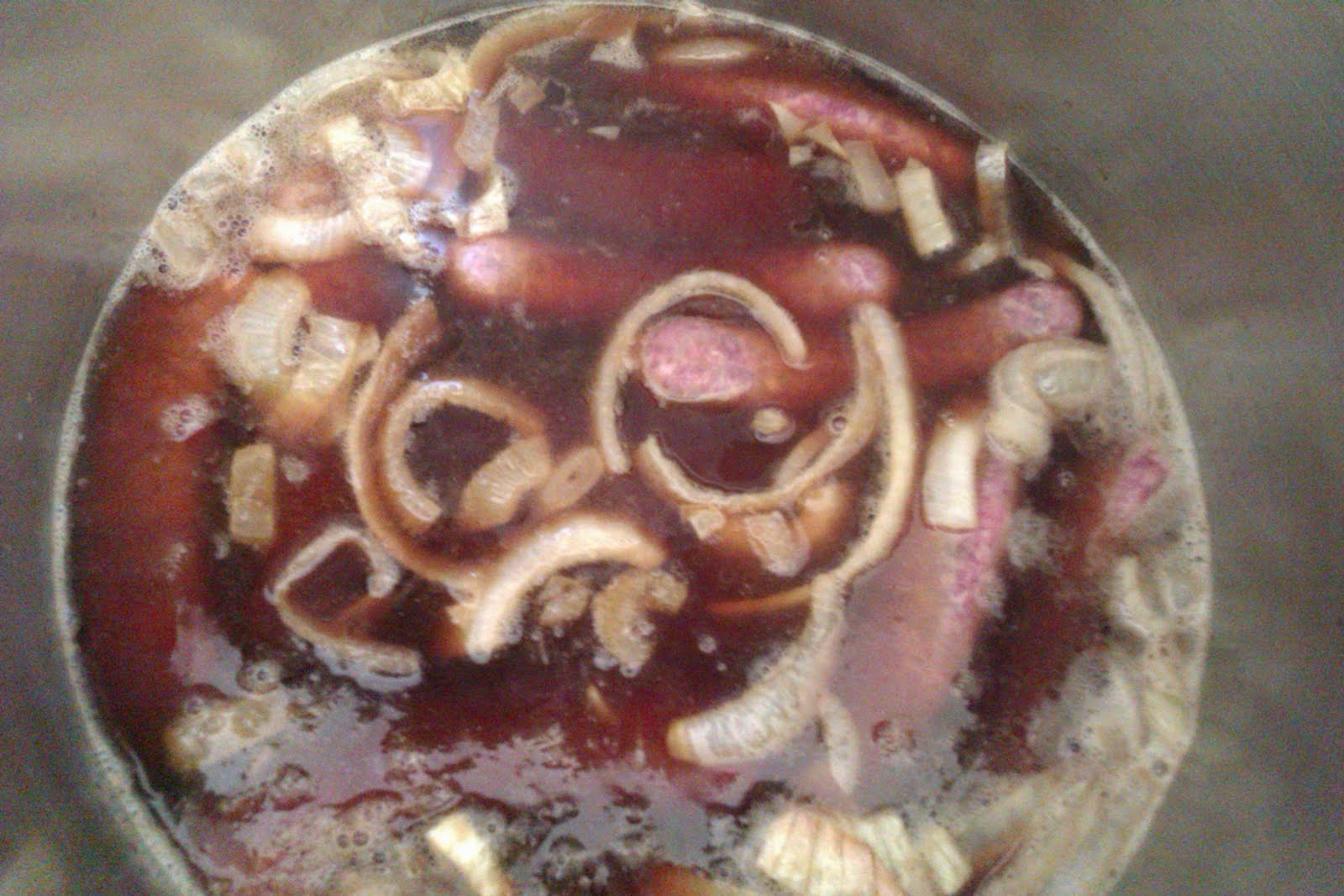
Using a big pot, melt the butter and oil at medium-high heat, add the onions, and pinch or two of salt and cook, stirring occasionally, until the onions are almost caramelized, about 15 - 20 minutes.  The way to tell is if they're soft and just starting to turn brown.  Towards the end of this cooking add your sugar.  I used regular granulated white sugar, but brown would be good too.


Add your brats, beer, and enough beef broth to cover the the brats and then cook for about 30 - 45 minutes on medium heat.  You don't want to boil the brats.  Boiling will cause the skin on the brats to split which lets out all the flavor you've been cooking in.  Instead keeping at a simmer, so you see little bubbles continually rise.  Meanwhile your house will smell amazing as these babies cook.


After cooking them, transfer the brats with tongs to a grill.  You should have the grill going at about medium to medium high heat.  You can tell the ideal temperature for the grill by putting your hand about 2 inches above it.  You should be able to hold your hand there for about 4 - 5 seconds.  Score both sides of the brats to your liking, but probably about 3 - 5 minutes per side.  Keep your beer and onions mixture on the stove and up the heat.  It should start to thicken and you'll get some great glaze and beer onions.

When the brats are done, transfer them directly into a beer bath with the remaining beer, in my case the Kellerweis.  This last second beer bath will add a little more beer flavor (so you may want to stick with your original beer choice), but also keeps them nice and moist, everyone hates those dried out disgusting hot dogs and sausages at bbqs.


Put the brats in buns and top with the beer glaze and onions and anything else you like.  We offered people a hot pepper relish, sauerkraut, mustard and banana peppers.

They turned out fucking amazing.  Try it out!

Tuesday, January 11, 2011

In Defense of Hops


Recently, a friend sent me this article from the New Scientist.  My apologies that this isn't an open link, however, the registration is free and the article is fairly short if you'd like to read it.  If you'd rather not, it's called, Extreme Beer: No Accounting for Taste, and I'll summarize by giving you the tag line: "American craft beers are getting ever more bitter, expensive and undrinkable – so how do we learn to savour tastes we're hard-wired to spit out?"  The article goes on to make a few observations about the surge in craft beer popularity and then tries to suggest some possible evolutionary reasons behind our predilection for odd tastes, namely bitterness.  The article also spends some time talking about Russian River's Pliny the Younger, which needs no explanation or introduction for my audience, except to say that it seems to have reached a new level of recognition even beyond the confines of the craft beer world.

It's interesting science, although the conclusions seem to be incredibly negative, painting the motivation behind craft beer drinkers as drunken, caffeine and marijuana addicts, looking to prove our wealth, popularity, and masculinity, from an evolutionary standpoint that is.  It's a portrait that might have some truth as you gaze across American culture, but probably less so in the craft beer market as compared to the mass beer market.  


But accurate or not, something bothered me about this article as I read it.  I actually was just drinking Pliny the Elder (Younger's lesser, but much more attainable cousin) and Russian River's Temptation '08 (one of the famous sours she refers to in the article) last week at Toronado in San Francisco.  The place was packed, the beer was delicious, and it was a great time.  Surely this Thursday afternoon could be attributed to far more than the evolutionary outcomes of a bar full of people's misguided desires and addictions. 

From a beer drinker's perspective, whether a hops lover or not, I think there is a foundation in history that has informed culture and is worth mentioning.  Surely, when someone thinks of the unpalatable flavors in beer, the first flavor in question is bitterness.  And true to form, this article spends much of its time questioning (although I'm tempted to say "bemoaning") the bitterness flavor that most craft beer drinkers have become accustomed to drinking.


It's an understandable critique.  The first time I tried an extremely hoppy beer, I wasn't charmed immediately.  It took a few drinks and some exposure of the subtle flavors it contained and accompanied the bitterness, the way the alpha acids worked with the flavor of the grain and yeast to really understand how good the taste could be.  I know a number of beer snobs who think the overabundance of hops in beer is a real tragedy, and ever since hops were outlined as a required ingredient by the German Reinheitsgebot in 1516, they've been a pivotal, yet sometimes controversial part of the beer process.


Hops are a vine flower that share a lot of similarity to grapes used for making wine.  And just like grapes, they are subject to a concept called "terroir."  Terroir is the idea that the geographic climate, soil, and atmosphere impart specific characteristics to the plant.  So while Germany, the world's largest hop producer, and the US, the world's second largest hop producer, have similar conditions for growing, say a Noble hop variety, there will be subtle taste differences in the hop pertaining to the region in question.  Magnify this effect over centuries, add modern technology and a knowledge of genetic breeding in plants and we get quite a wide variety of Alpha and Super Alpha hop strains produced in the US and specific to its soil.  Names like Willamette, Chinook, Simcoe, Summit, and Cascade, just to name a few.  It doesn't take long for people to start using these hops in experimental brewing and suddenly we give birth to the distinctive flavor of the American Ale.  The American Pale, the American IPA, the American Red, and really almost every beer from the British style, all with a new bite and finish because of the hop production based locally here.


The hops arms race, started around 20 or so years ago, and saw its biggest rise in the past 10 years, as different brewers pitted against each other, trying to cram all these new super high acid hop strains into their beers.  I'm not really sure it's over, but it's a period marked by strong experimentation and individual creativity among craft beer brewers.  Now how can that be a bad thing?  In fact, I would extend that argument to say that it was this opportunity to step outside the conventional stylistic guidelines and restrictions with hops that opened up the idea of using different ingredients, experimenting with styles as a whole.


Some embrace the hop explosion and ridiculous levels of IBUs in these new beers.  Others see it as a gimmick that ruins the natural flavors of traditional beer.  Whether you're a hops fan or not, you have to admit the important role hops played in shaping the beer renaissance that followed.  That renaissance is a reflection of the real heart of American ingenuity and agriculture.  Beer, is not simply a beverage, it is a cultural reflection.  For centuries, beer has been defined by Belgian Monasteries, German Beer halls, British Pub Beers, and Czech Pilsners.  Finally, American beer has a way to separate itself from these giants with something other than mass produced flavorless lagers in cans.  Whether you like hops or not, it's important to understand that they opened the floodgates of an American revolution in beer.


So maybe the next time you pick up a pint of whatever you happen to be drinking, hoppy or not, show a little love to the bitter coned flower that helped pave the way for so many other brews.


Cheers!

Tuesday, November 23, 2010

Drake's Denogginizer at Jupiter

This week I'm blogging live from Jupiter in Berkeley, California.  We're on our way up to Oregon for Thanksgiving and decided to stop, see some family and friends, and catch a Warriors game.  Very excited to hit up some Caldera, Ninkasi and other great local Oregon brews, but the Bay has its own fantastic brewing legacy.  Unfortunately, there's no time to head over the bridge into the city to try some of the great bars like Toranado over there, but trying to make the best of our time.  

I've been to Jupiter before, and as I've stated before, I have a real weakness for pizza and beer, still not sure why there's no place in LA, but hopefully someone will read this and fix that.  Jupiter selection is nothing to go wild about, but their house brews are all brewed by Drake's, which has been churning out some fantastic brews of late.  The 1500 in my opinion is one of the finest Pale's you can buy.  Today I decided to have the Denogginizer, a seriously hopped up double that I meant to review last month, but ended up just drinking it instead.  

The color is a pretty deep orange, almost approaching an amber.  I'm having a little bit of allergies after a long walk, so my nose isn't as sharp as usual, but the aroma is a light lemony/citrus hops with a sweet backbone.  Last time I had this I remember the aroma being much more in your face with serious dry hop flavors, so perhaps this keg has been sitting around.  The taste opens a mouthful of grains, maybe carafa, certainly on the darker side for an IPA, but just enough lightness to distinguish it from an Amber.  As it opens up a huge wheelbarrow of apples gets dumped on your tongue, almost to the point that you start thinking about cider.  However, before the double heads down a truly tragic path, it's rescued by a strong swing of beta hop acids that lend dark bitters and hints of black pepper.  The body is smooth but with substance, perhaps the most attractive quality of this beer.  


It's a well rounded double, which is what you look for in this style, and the reliance on beta acids and apples reminds me a lot of Avery's Maharaja, which is an excellent beer.  I only wish this would push a little harder in the hops department, balancing those strong low end acids with some brighter high acids.  Considering how hopped up their 1500 is, you would think their double would knock your socks off.  Socks are still on, but still enjoying the hell out of this beer.

Denogginizer: ****